The page is under construction (1 XII 2024), (21 XII 2025), (9-21 I 2026)
In order to better understand the way, the recognition application “sees” the photos and suggests the species names accordingly, typical examples of photos are listed: first the suggestion for the depicted species and then, how the suggestion is modified, when manually, in the initial photos add or remove markings or even colors on the wings. The application “sees” these changes and modifies the proposed name to another one (as it perceives it to be, after adding or modifying the signs)
…………………………………………………………………………………………
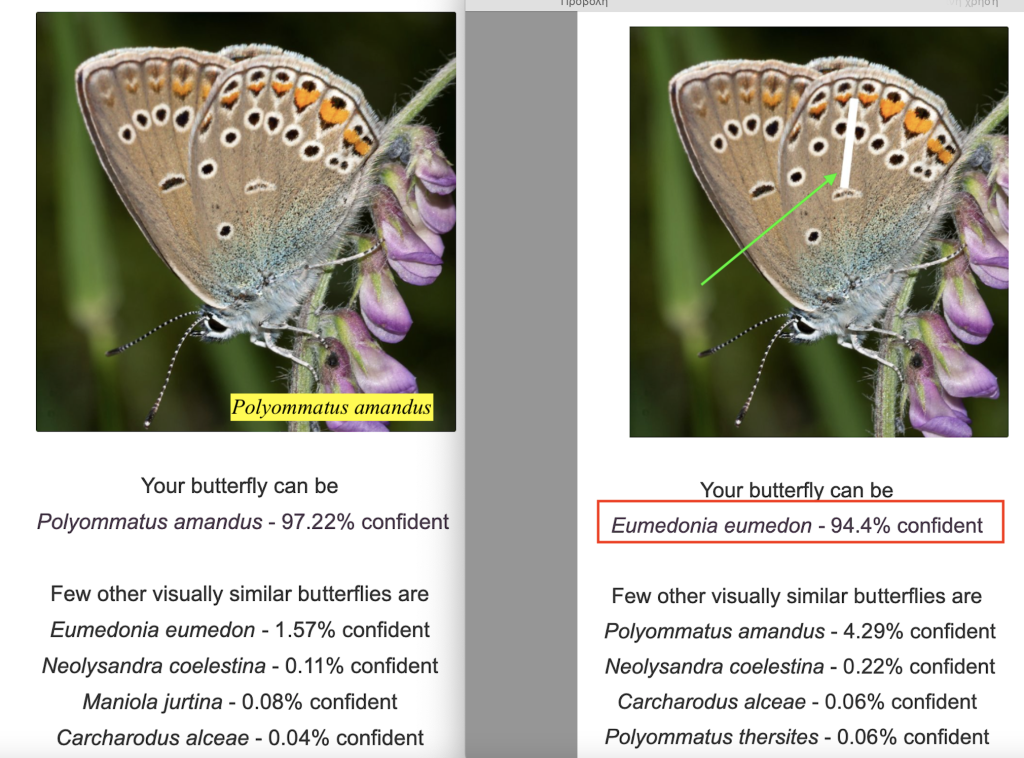
In the photo, on the LEFT, we see the correct suggestion for a female Polyommatus amandus (with 97.22% confidence). In the same photo of this individual, on the RIGHT, a white line was added (in the GREEN arrow) and then it suggests Eumedonia eumedon (with 94.4% confident).
…………………………………………………………………………..
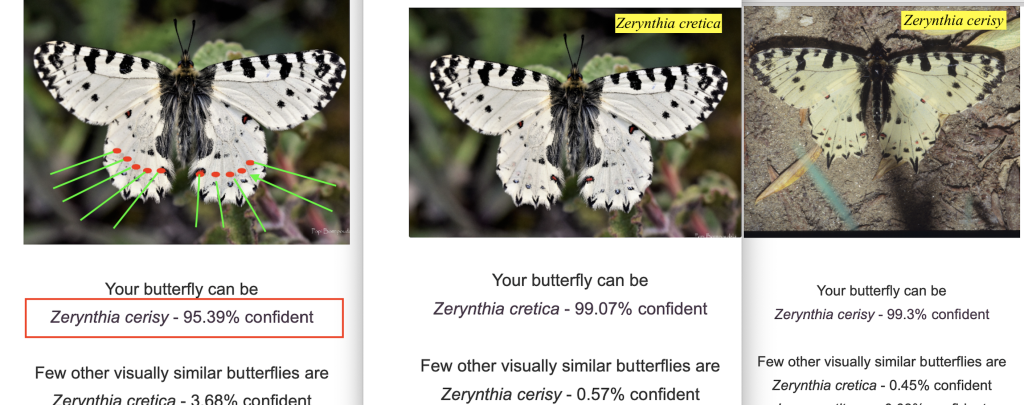
In the photo, on the RIGHT, we see the correct suggestion for a male Zerynthia cerisy (with 99.3% confidence). In the photo in MIDDLE, we see the also correct suggestion for a male Zerynthia cretica (with 99.07% confident). In the photo of the same individual of Zerynthia cretica, on the LEFT, red marks were added (in the GREEN arrows) and then it suggests Zerynthia cerisy (with 95.39% confident).
…………………………………………………………………………………..
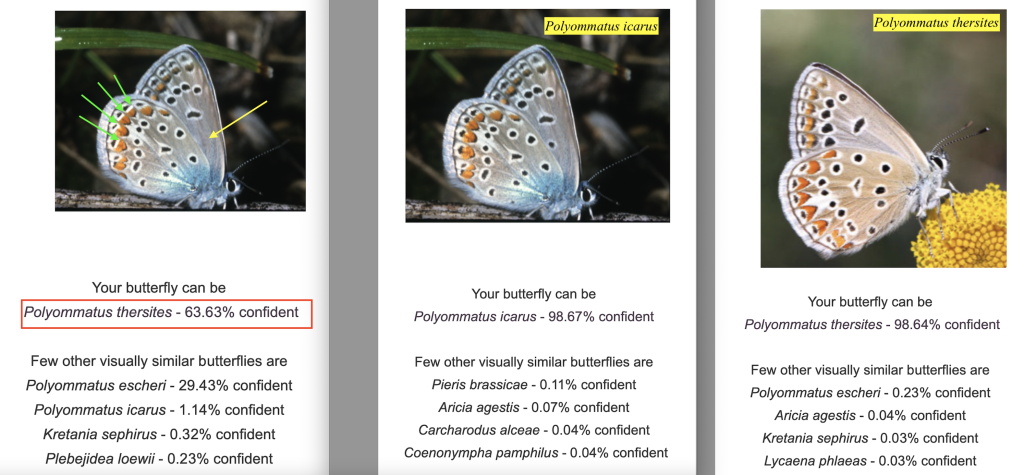
In the photo, on the RIGHT, we see the correct suggestion for a male Polyommatus thersites (with 98.64% confident). In the photo in MIDDLE, we see the also correct suggestion for a male Polyommatus icarus individual (with 98.67% confident). In the photo of the same individual of Polyommatus icarus, on the LEFT, the cell mark was removed (in the YELLOW arrow), small white marks were added (in the GREEN arrows) and then it suggests Polyommatus thersites (with 63.63% confident).
………………………………………………………………………..
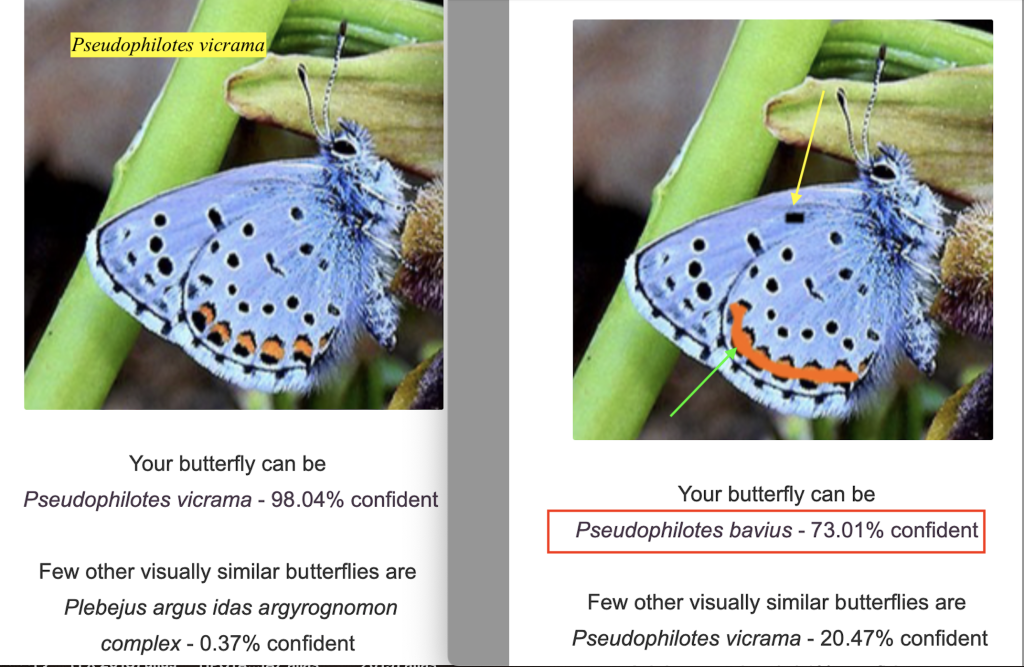
In the photo, on the LEFT, we see the correct suggestion for a male Pseudophilotes vicrama (with 98.04% confidence). On the photo of this individual, on the RIGHT, red marks were added forming a solid color band (in the GREEN arrow), a mark in the cell (in the YELLOW arrow) and then it suggests Pseudophilotes bavius (with 73.01% confident).
………………………………………………………………………..
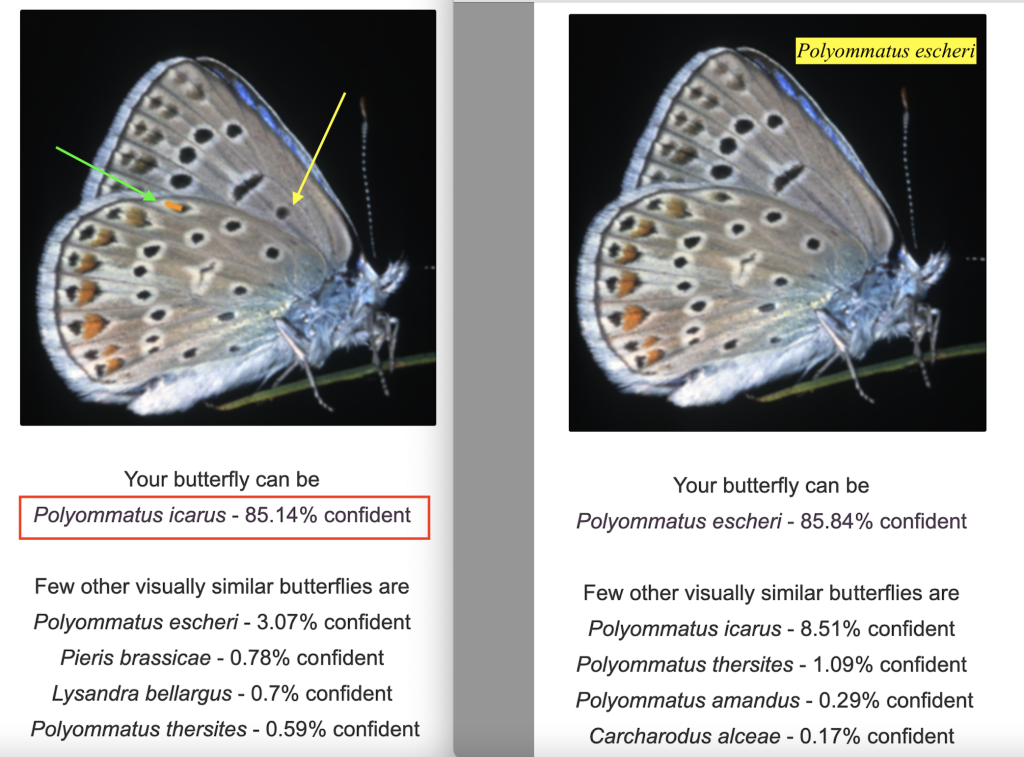
In the photo, on the RIGHT, we see the correct suggestion for a male Polyommatus escheri (with 85.84% confident). In the photo of the same individual of Polyommatus escheri, on the LEFT, a cell mark was added (in the YELLOW arrow), a small orange mark was added (in the GREEN arrow), and the app suggests Polyommatus icarus (with 85.14% confident).
……………………………………………………………
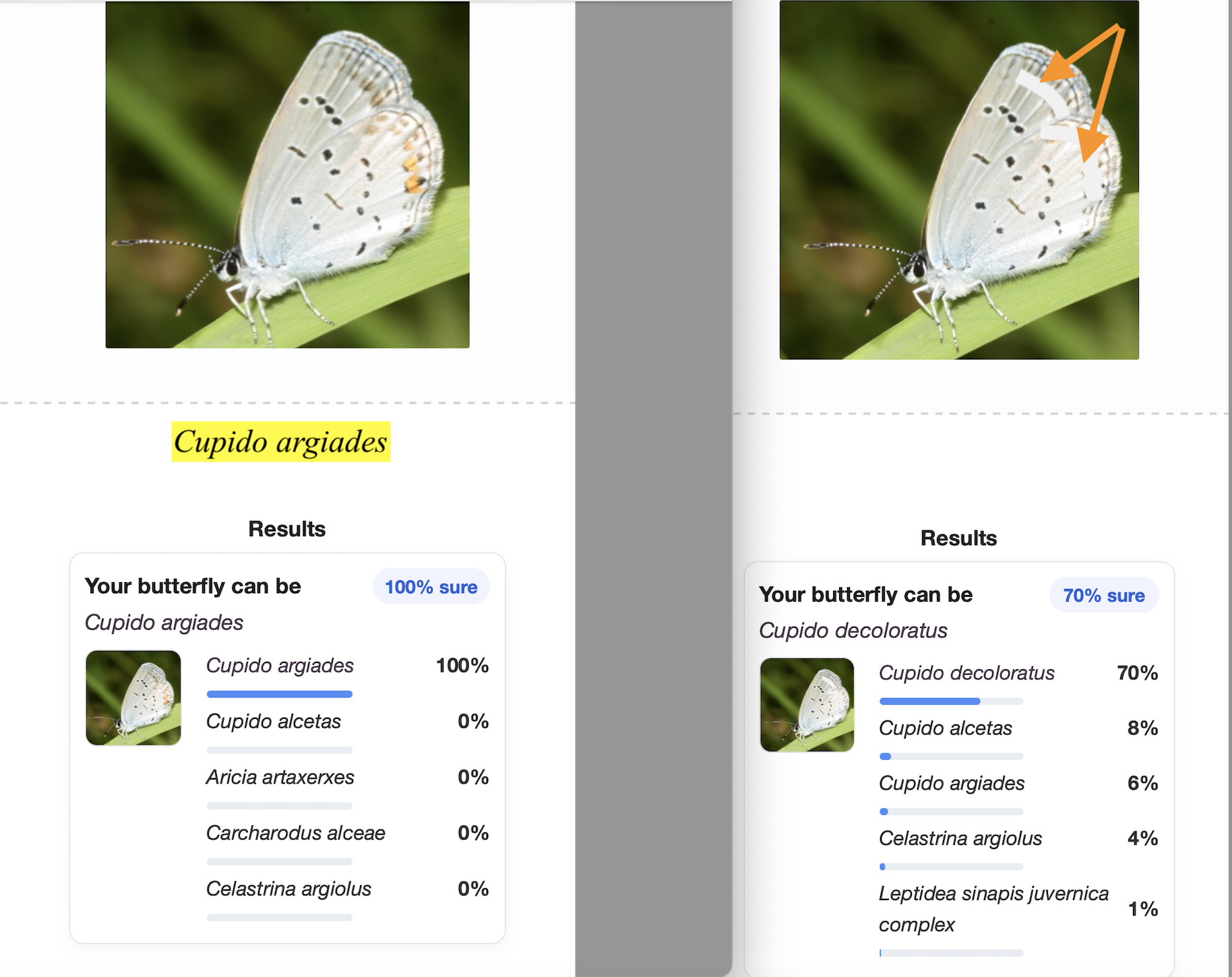
In the photo, on the LEFT, we see the correct suggestion for a male Cupido argiades (with 100% confident); in the photo of the same individual of Cupido argiades, on the RIGHT, the orange markings are removed (in the ORANGE arrows) and the application suggests Cupido decoloratus (with 70% confident).
…………………………………………………………………………………….
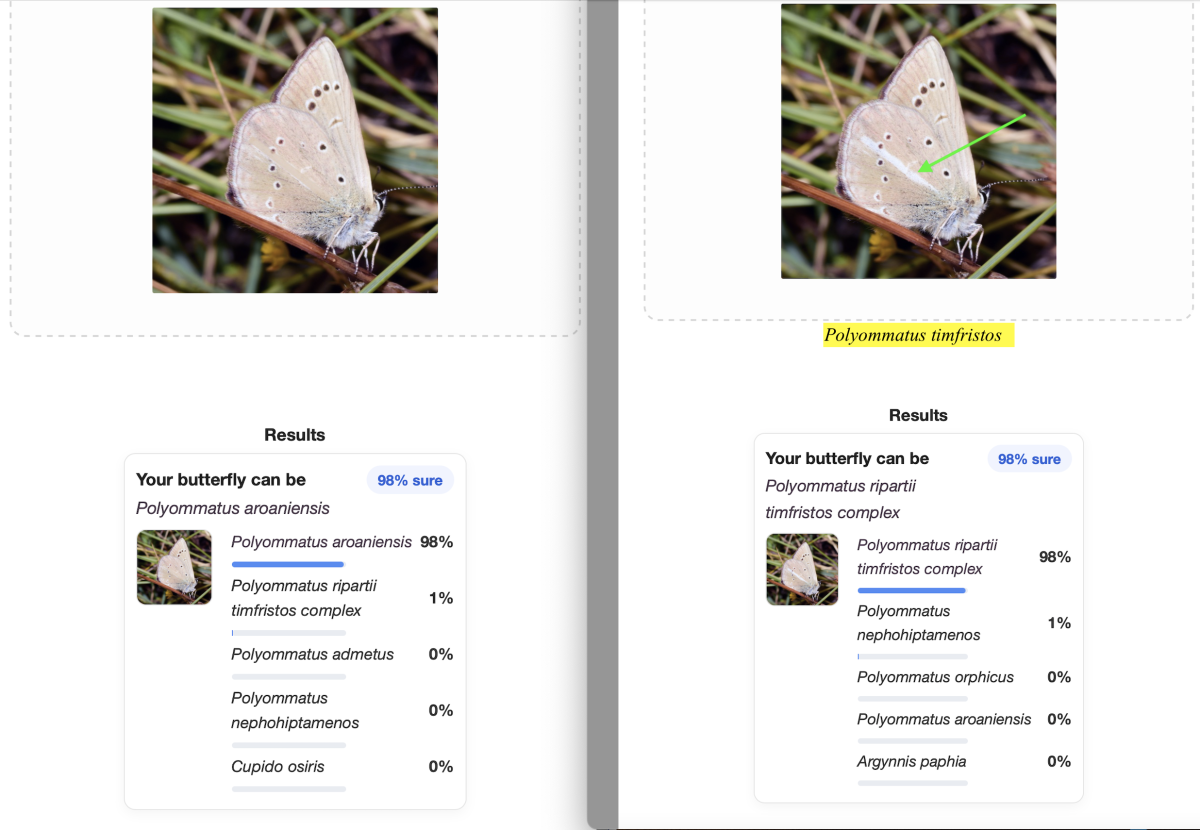
In the photo, on the RIGHT, we see the correct suggestion as Polyommatus ripartii timfristos complex (with 98% confident) for a male individual of Polyommatus timfristos. In the photo of the same individual of Polyommatus timfristos, on the LEFT, the white stripe were removed (in green arrow) and the application suggests Polyommatus aroaniensis (with 98% confident).
……………………………………………………………..
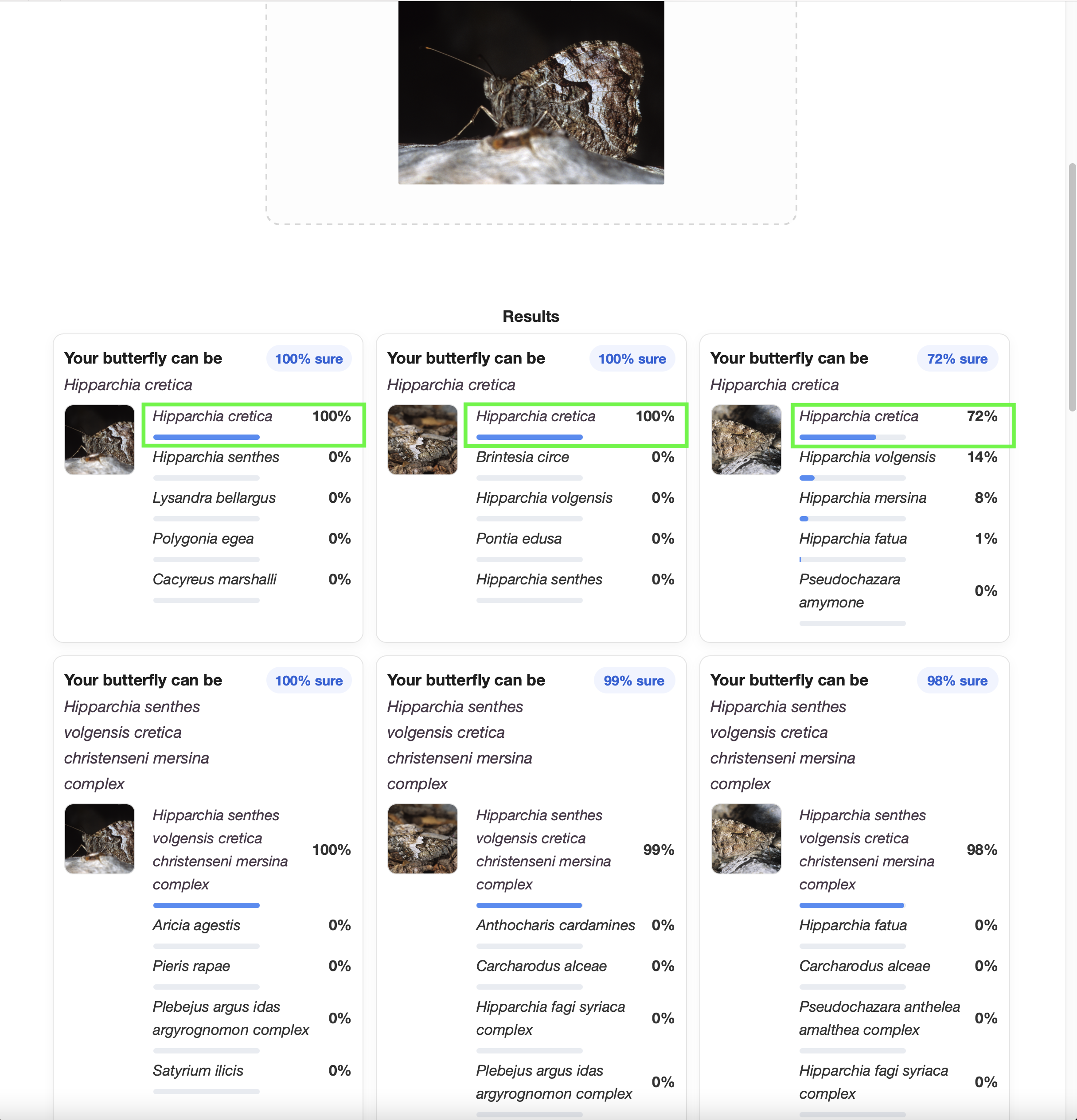
You can see above how Full recognition (Beta) works at species level and suggests correctly the name Hipparchia cretica versus the first recognition with complexes; in this last case suggests Hipparchia senthes volgensis cretica christenseni mersina complex. A set of three photos of Hipparchia cretica were uploaded in and Full recognition (Beta) suggests correctly the name. All three photos were taken in Crete.
……………………………………………………………………..
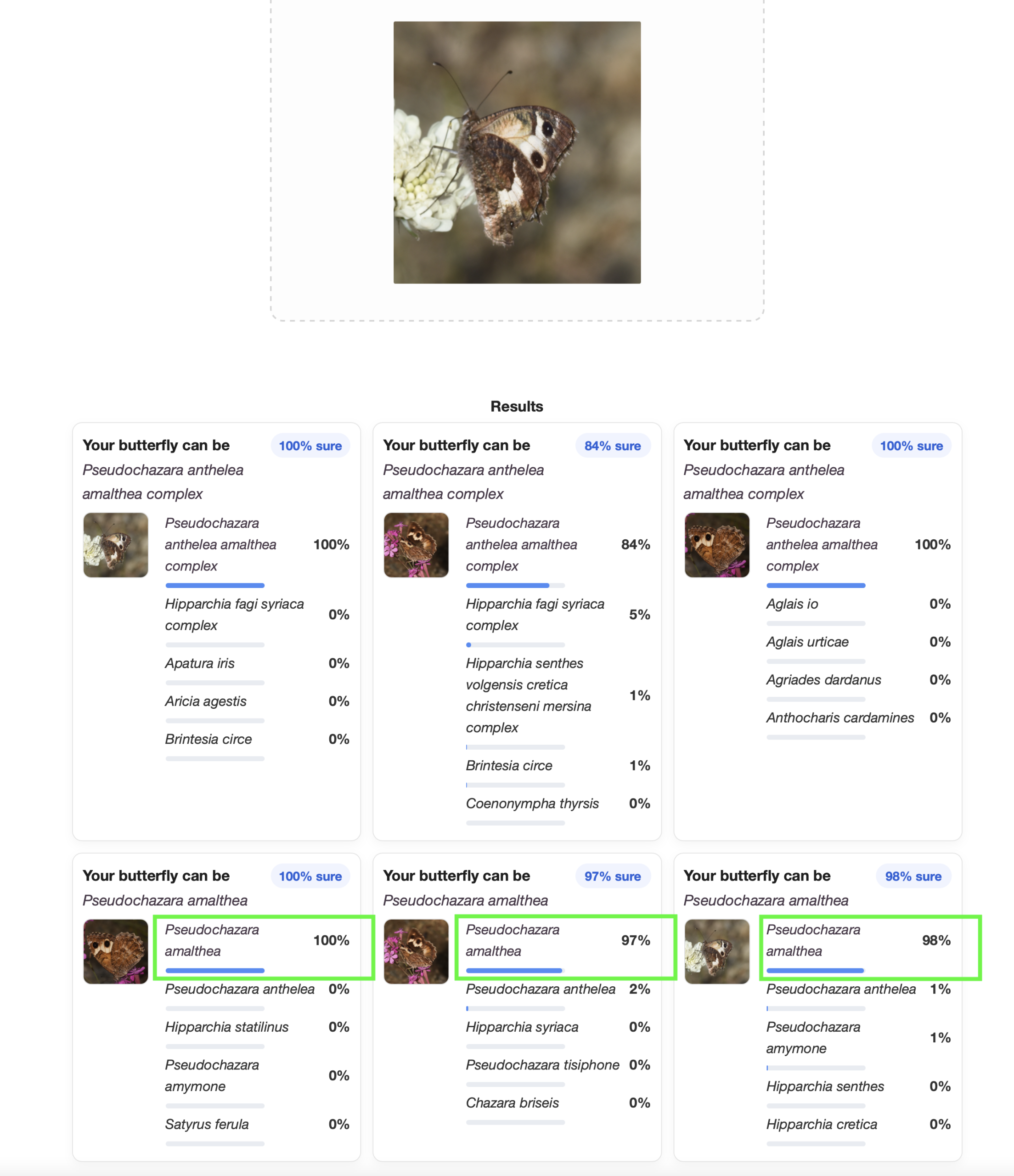
You can see above how Full recognition (Beta) works at species level and suggests correctly the name Pseudochazara amalthea versus the first recognition with complexes; in this last case suggests Pseudochazara anthelea amalthea complex. A set of three photos of Pseudochazara amalthea were uploaded in and Full recognition (Beta) suggests correctly the name. All three photos were taken in Crete.
…………………………………………………………………………………..
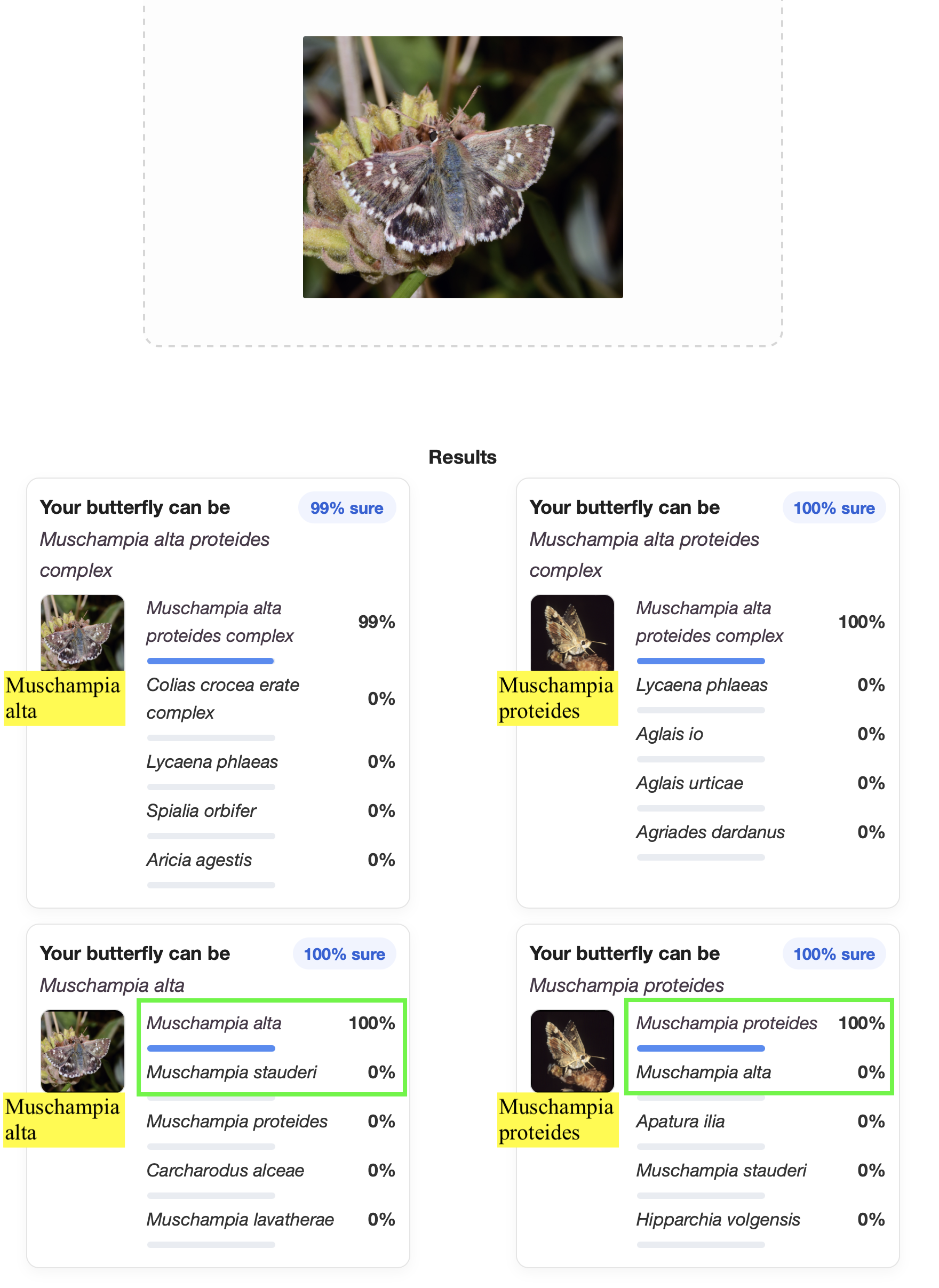
You can see above how Full recognition (Beta) works at species level and suggests correctly the name Muschampia alta (LEFT) Muschampia ptroteides (RIGHT), versus the first recognition with complexes; in this last case suggests Muschampia alta ptroteides complex for both.
…………………………………………………………………….
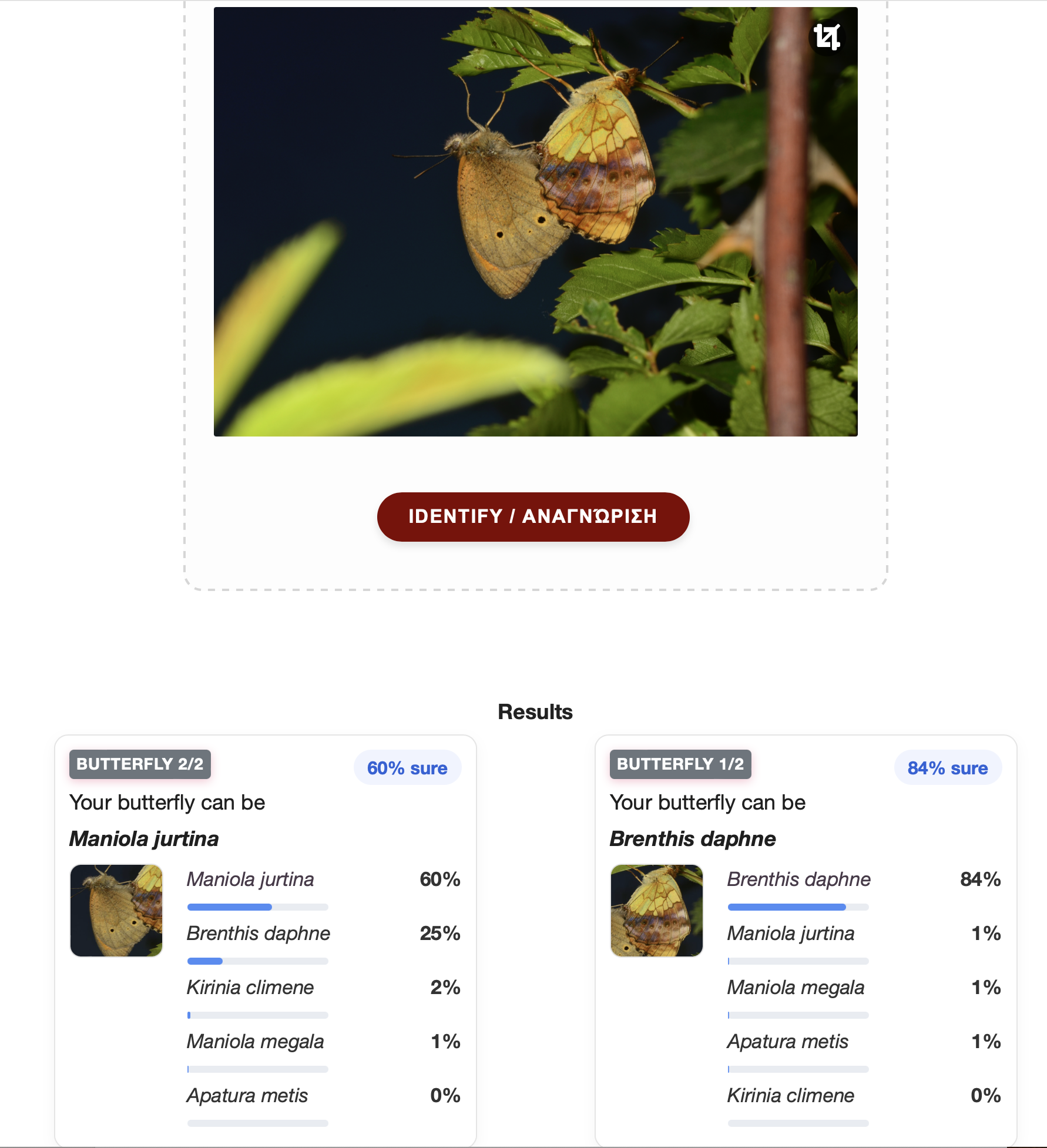
You can see below how the Auto Crop option works and identifies two butterflies, Maniola jurtina (LEFT) and Brenthis daphne (RIGHT), which were photographed mating.
……………………………………………………………………..
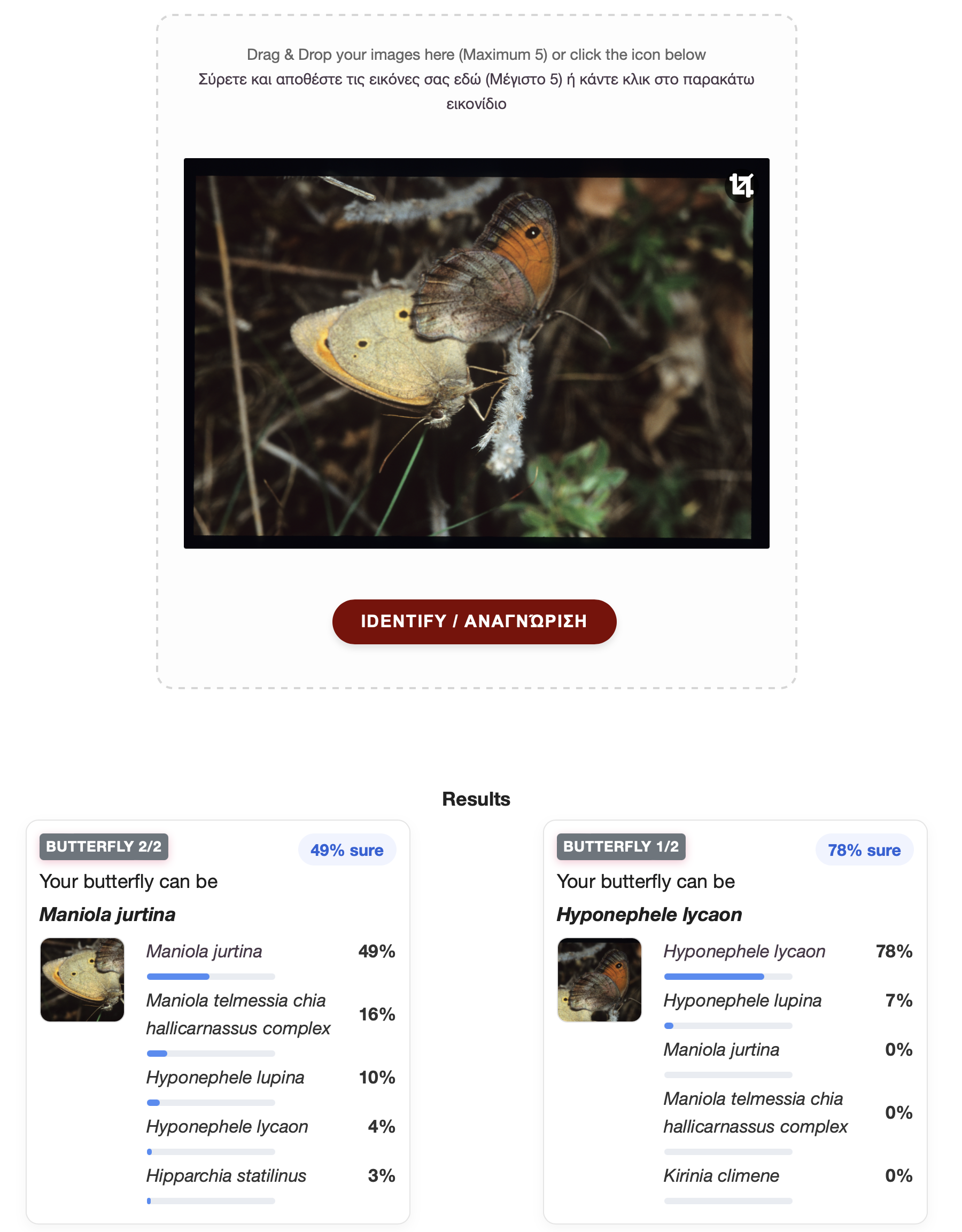
You can see below how the Auto Crop option works and identifies two butterflies, Maniola jurtina (LEFT) and Hyponephele lycaon (RIGHT), which were photographed mating.
……………………………………………………………………….
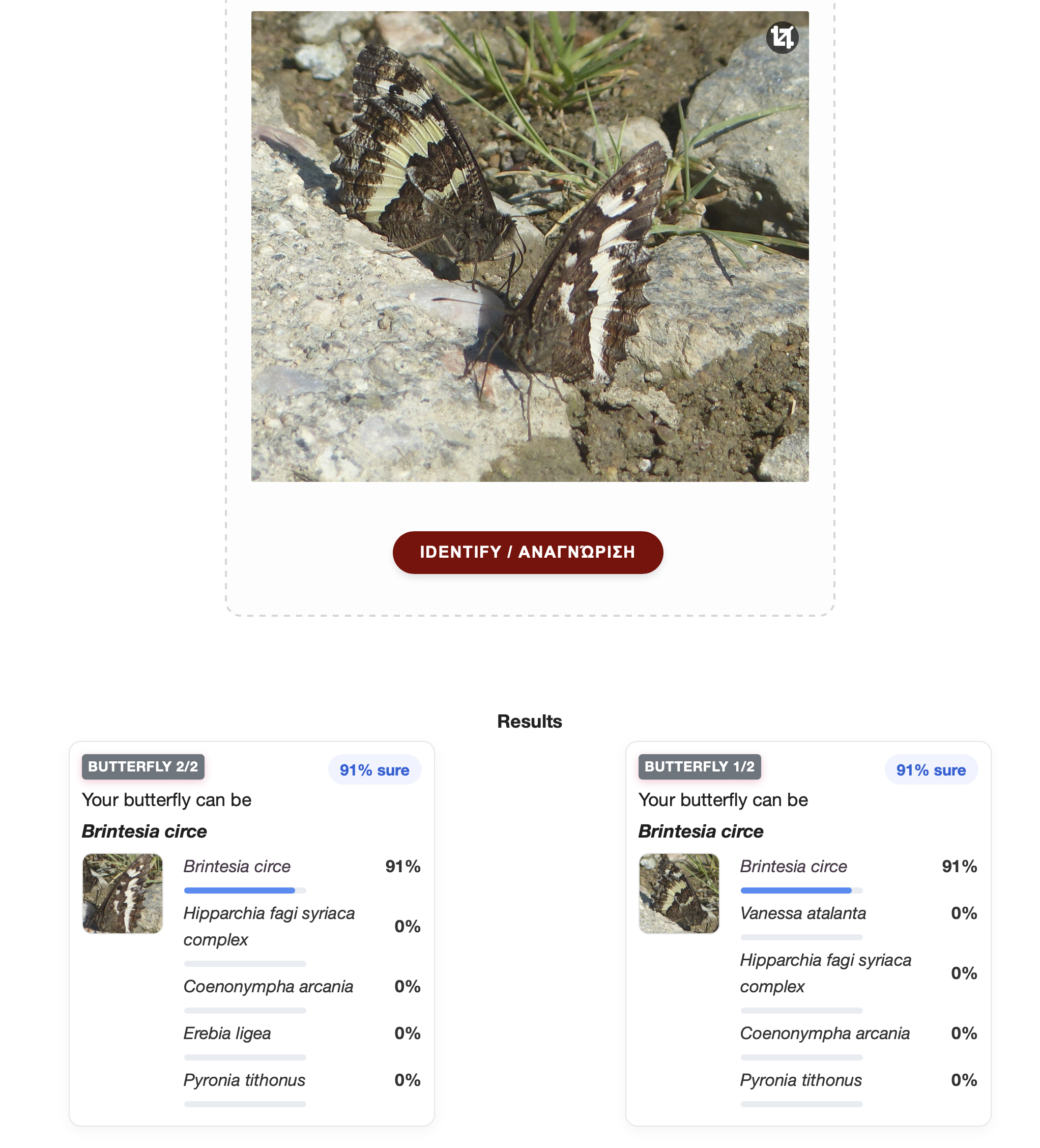
You can see below how the Auto Crop option works and identifies two butterflies, a male Brintesia circe (LEFT) and a female Brintesia circe (RIGHT).
…………………………………………………………………………
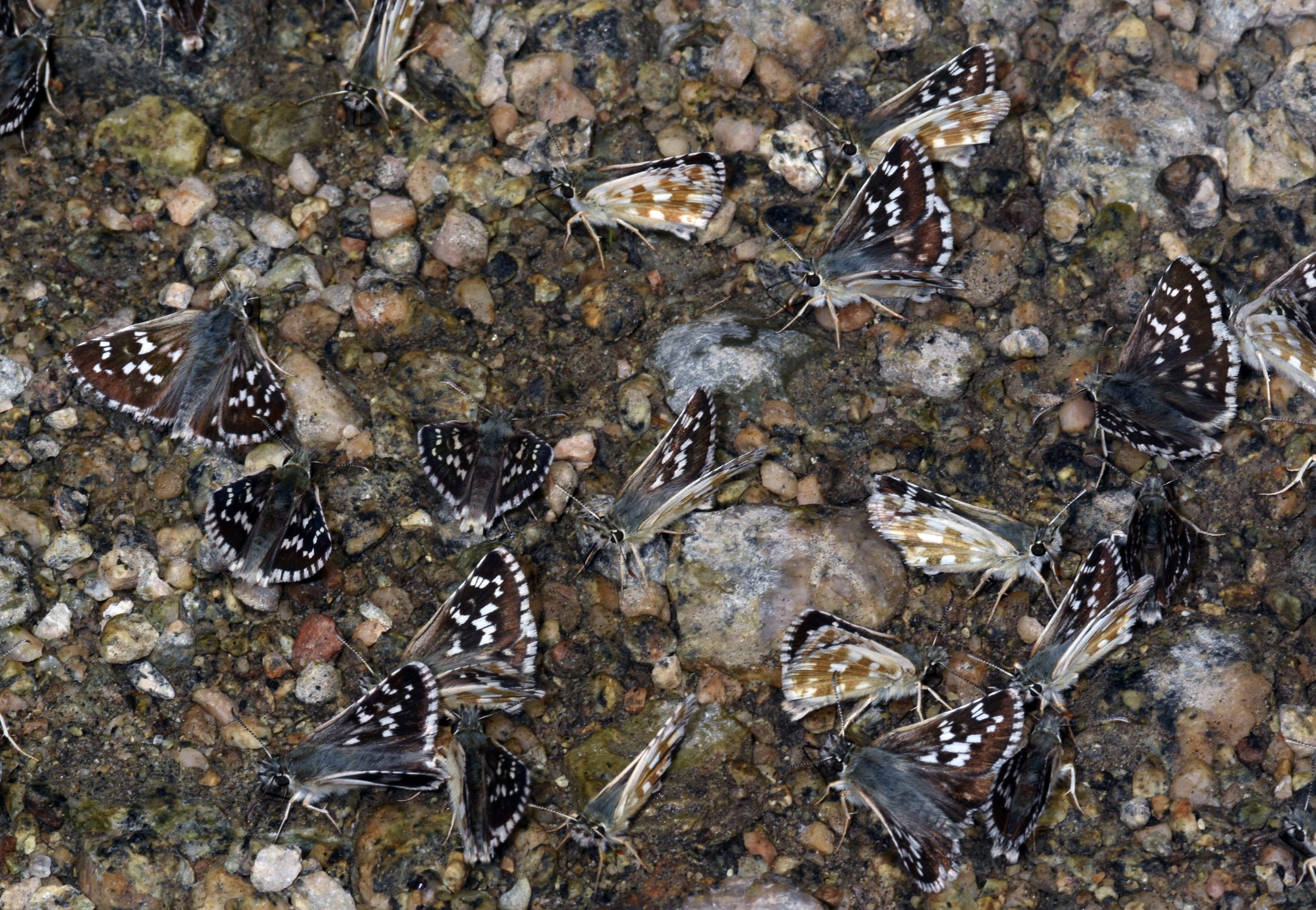
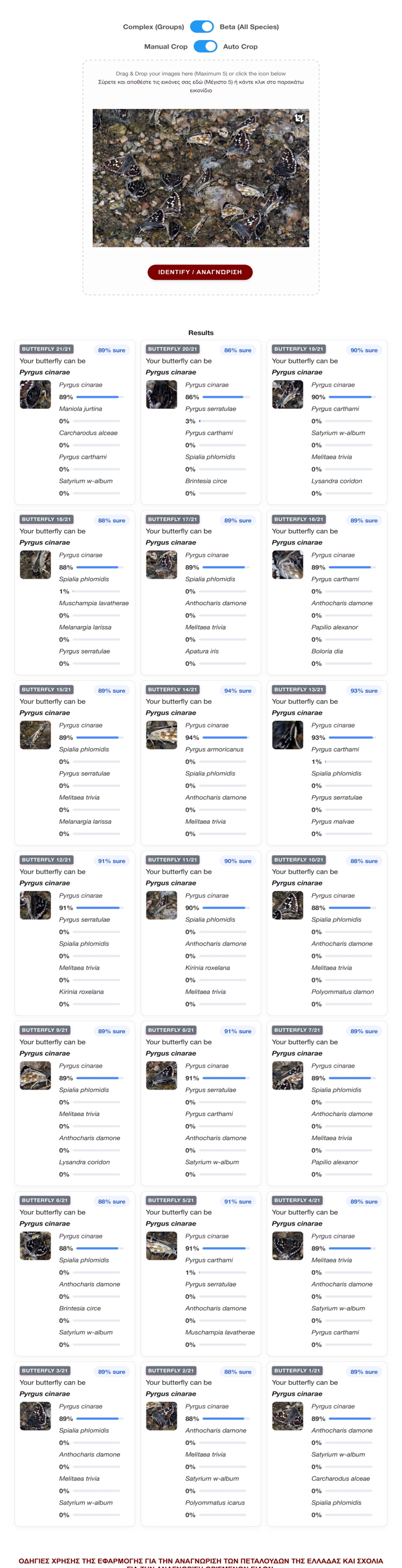
All (21 in total) individuals of the butterfly Pyrgus cinarae, depicted in the photo above, are correctly identified with the Auto Crop and Beta options, as shown below.